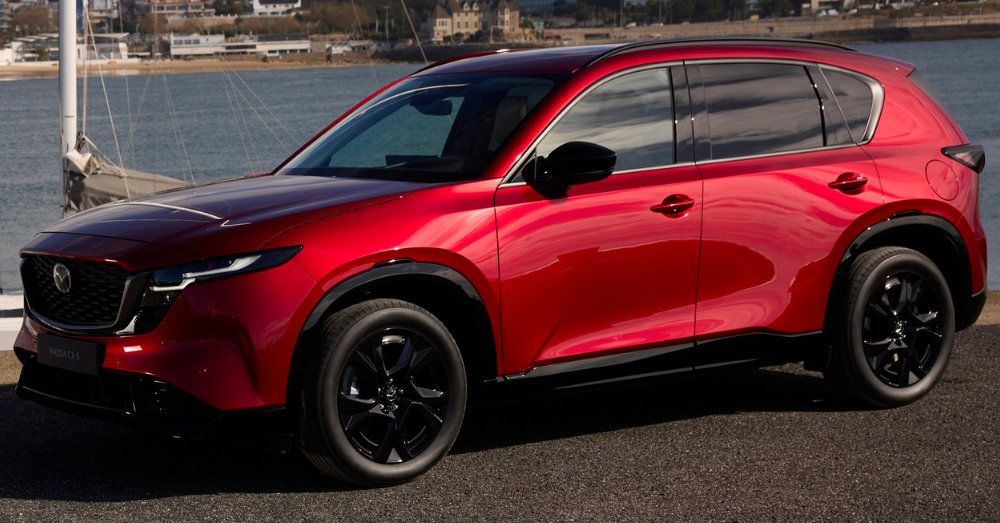
Mazda just announced pricing for the redesigned 2026 CX-5, and the news is a mixed bag. The base model stays affordable with only a modest price bump, but the top trims have jumped significantly higher. The turbo engine? Gone. What you get instead is a bigger cabin, new tech, and a promise of a hybrid coming next year.
- The 2026 CX-5 starts at $31,485 including destination, just $940 more than the 2025 model.
- Premium and Premium Plus trims hit $38,395 and $40,485 respectively, with the Premium Plus seeing a $3,310 price jump.
- The turbocharged engine option disappears from the lineup for 2026, though a hybrid powertrain is coming in 2027.
What You’re Paying For
The CX-5 is now longer and wider, with a wheelbase stretched by 4.5 inches. The redesign gives rear passengers more than 2 inches of additional legroom and an extra inch of headroom. If you’ve ever sat in the back of a current CX-5, you know this was needed. The old model felt cramped back there, especially on longer trips.
The new model features Google Built-in technology and Gemini AI assistant functionality, allowing for hands-free voice controls. Premium Plus models get a 15.6-inch center infotainment display, additional USB-C charging ports, and a 12-speaker Bose audio system. That massive screen is the largest Mazda has ever put in a vehicle, and it’s a welcome upgrade from the previous generation’s smaller setup.
Standard equipment includes 17-inch wheels, dual-zone climate control, and a 12.9-inch touchscreen on base models. Premium Plus models are the only version equipped with paddle shifters. So if you want that bit of manual control over the six-speed automatic, you’ll need to pony up for the top trim.
The Turbo Engine Is Gone
The third-gen CX-5 launches with only a 2.5-liter non-turbocharged four-cylinder engine producing 187 horsepower and 185 lb-ft of torque. All-wheel drive comes standard across the lineup. The turbo engine that used to top the range? It’s been eliminated.
A hybrid version is reportedly in the works for 2027 and will likely cost more. The new SkyActiv-Z engine will feature Mazda Hybrid System technology to offer a higher level of performance and fuel efficiency. If you’re holding out for more power or better gas mileage, the hybrid might be worth the wait. But for 2026, you’re getting the base engine whether you buy the cheapest trim or the most expensive one.
EPA-estimated fuel economy is 24 MPG city, 30 MPG highway, and 26 MPG combined. Those numbers are competitive but not class-leading, especially when rivals like the RAV4 Hybrid are pushing over 40 MPG combined.
How It Stacks Up Against the Competition
The CX-5 now positions itself slightly above its CX-50 cousin, which starts at $31,395. The $90 difference is negligible, but the CX-5 offers more rear legroom while the CX-50 keeps its rugged styling and available turbo.
The Toyota RAV4 starts at $33,350, the Volkswagen Tiguan costs $32,840, and the Honda CR-V is $32,370. The CX-5 undercuts all of them, which works in your favor if you’re shopping on a budget. The Kia Sportage, however, starts at $30,285 for 2026, making it the cheapest option in the segment.
If you’re shopping at dealerships like Mazda Beavercreek or other locations across the country, you’ll want to test drive the CX-5 alongside these competitors. The pricing looks good on paper, but how it drives and how much space it offers will determine whether it’s the right fit for your needs.
Is the Price Jump Worth It?
Mazda is focused on providing an accessible entry point with lower trims, but the price hikes on higher trims indicate hopes to increase profit margins on premium versions. That $3,310 jump for the Premium Plus is steep, especially when you’re not getting a more powerful engine option.
The base 2.5 S trim at $31,485 still represents solid value. You get standard all-wheel drive, the new infotainment system with Google built-in, and all the safety tech Mazda is known for. Move up to the Select or Preferred trims at $33,485 and $35,745, and you add conveniences like wireless charging, heated seats, and a power tailgate without breaking the bank.
But once you hit that $40,000+ price point with the Premium Plus, you’re competing with near-luxury crossovers that might offer more refinement or power. The decision becomes trickier there.
Should You Wait for the Hybrid?
If fuel economy matters more to you than having the latest model right now, waiting for the 2027 hybrid is probably your best bet. Mazda hasn’t released power or efficiency numbers yet, but hybrids typically offer both better performance and better gas mileage than their gas-only counterparts.
The 2026 model will start arriving at dealerships in the coming months. If you need a vehicle soon and like what the redesigned CX-5 offers, the base or mid-level trims deliver good value. But if you can wait another year, the hybrid will likely give you the best balance of power and efficiency.
This post may contain affiliate links. Meaning a commission is given should you decide to make a purchase through these links, at no cost to you. All products shown are researched and tested to give an accurate review for you.