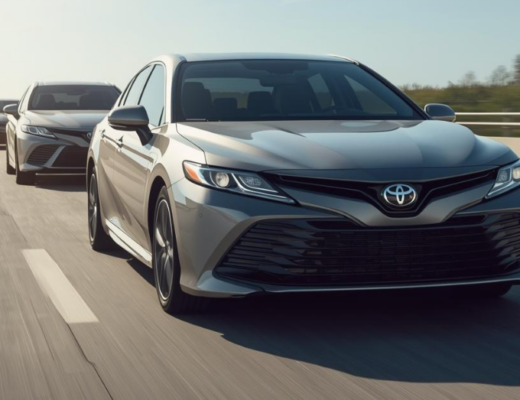

You’ve probably heard someone say that a Lexus is just a dressed-up Toyota. There’s a nugget of truth in there, since both the Camry and the ES share the same GA-K platform. But the gap between these two sedans is more interesting than people think, especially when you load a Camry XSE to the gills and pit it against the cheapest Lexus ES you can buy. The numbers tell a surprisingly competitive story.
- A fully loaded 2026 Toyota Camry XSE with all-wheel drive and every option totals $46,452.
- The 2026 Lexus ES carries a starting price of $48,795 for the ES 350e Premium, its electric base model.
- Both the Camry XSE and Lexus ES 350h are estimated to get a combined 44 mpg, putting yearly fuel costs at roughly $1,000.
How the Pricing Shakes Out
A 2026 Toyota Camry XSE with all-wheel drive starts at an MSRP of $37,025. That’s already a well-equipped car. But we’re going all out here. The $4,760 Premium Plus package adds features like a panoramic moonroof, head-up display, and a surround-view monitor. Toss in every remaining option, and the total comes to $46,452.
On the Lexus side, if you want an internal-combustion engine, the cheapest hybrid ES 350h Premium starts at $50,995. The ES 350e Premium, an electric vehicle, starts at $48,795. A fully loaded Camry XSE comes in roughly $2,343 cheaper than an entry-level ES. That’s a whole lot of car for the money, and you’re still saving a couple thousand dollars.
Feature Comparison at the $46K-$49K Price Point
The loaded Camry XSE punches well above its weight in the tech department. The Camry features a 12.3-inch touchscreen interface versus an eight-inch unit on the outgoing ES, and both offer wireless smartphone integration. With the Premium Plus package, the Camry also adds a nine-speaker JBL audio system, a head-up display, a surround-view monitor, and a driver attention monitor.
The base 2025 ES includes a panoramic view monitor, a power moonroof, and Lexus Safety System+ 2.5, but you’ll have to pay extra for leather seats, all-wheel drive, rain-sensing windshield wipers, a wireless charging pad, navigation, and premium audio. The 2026 ES gets a nice bump with a 12.3-inch digital gauge cluster, 14-inch infotainment touchscreen, voice assist, and wireless Apple CarPlay and Android Auto as standard features. That’s a big improvement. Still, many convenience features will likely require stepping up from the base model.
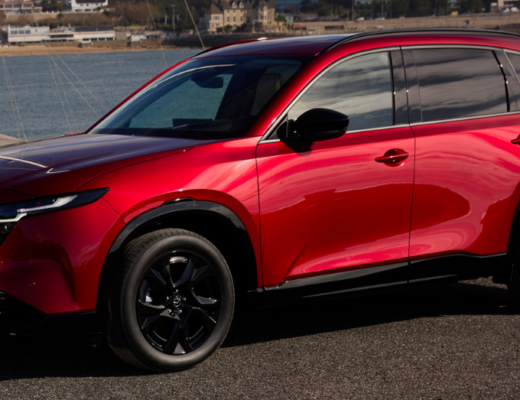
If you’re searching for a Toyota dealership near me to see the loaded XSE in person, it’s worth experiencing the cabin firsthand. The Cockpit Red leather-trimmed front seats, accented with black inserts along the door handles, center console, and air vents, give the XSE an upscale vibe that feels like it belongs in a pricier car.
Where the Lexus ES Still Wins
Numbers and feature lists don’t tell the whole story. What we’ve seen of the cabin in the all-new Lexus ES is pure class, with 3D-printed bamboo details, a 14-inch touchscreen, and pleasing, soft-touch textures wherever you rest your hand. Comparing a Lexus to a Camry is proof enough that there’s more to luxury than a long list of creature comforts.
J.D. Power names Lexus as its most reliable brand, while Toyota ranks eighth. The Lexus ownership experience, from dealer service to interior quality, carries a different feel that’s hard to quantify on a spec sheet. The new ES stands out with a sporty exterior featuring signature twin L-shaped front lamps and available 21-inch alloy wheels. And the 2026 ES will debut Lexus Safety System+ 4.0, the most capable suite of active safety features the brand has offered to date.
Interior space also grows in the new ES, thanks to an overall length that’s up 6.5 inches and a wheelbase stretched by 3.0 inches compared to the outgoing model. That’s a noticeable increase in rear legroom and general spaciousness.
Running Costs and Long-Term Value
The Camry XSE and Lexus ES 350h are each estimated to get a combined 44 mpg, which the EPA puts at $1,000 a year in fuel costs. So fuel economy is practically a dead heat between the two hybrids.
Insurance is another factor, with CarEdge estimating an annual cost of $2,039 for the Camry compared to $3,033 for an entry-level Lexus ES hybrid. That’s nearly $1,000 per year in savings for the Camry, and it adds up fast over a typical ownership period. Looking at five-year depreciation, the Lexus ES 350 loses 42.1% of its value while the Toyota Camry loses 35.5%. The Camry holds onto more of your money over time.
Toyota also pays for scheduled maintenance on the Camry for one year and 15,000 miles longer than Lexus covers the ES. Small perks like these make the ownership math tilt toward the Camry.
Picking the Right Sedan for Your Budget
If raw value is your priority, the fully loaded Camry XSE is tough to beat. You get leather seats, all-wheel drive, a large touchscreen, premium audio, and every available tech feature for less than the base price of a Lexus ES. The lower insurance costs and better resale numbers only sweeten the deal.
But if the Lexus badge, cabin ambiance, and that refined driving feel matter to you, the ES earns its premium. The redesigned 2026 model is a serious upgrade, and starting under $49,000 for an EV version actually makes it competitive with cars from BMW and Mercedes that cost tens of thousands more. Your choice comes down to where you want to spend your money: on a Toyota packed with everything or a Lexus that nails the luxury basics with room to grow.
This post may contain affiliate links. Meaning a commission is given should you decide to make a purchase through these links, at no cost to you. All products shown are researched and tested to give an accurate review for you.