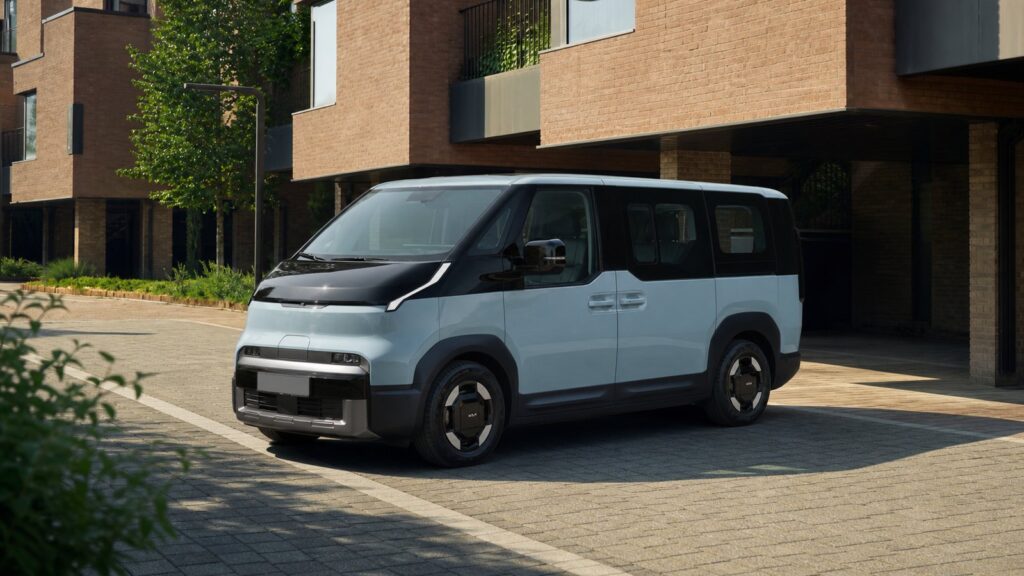
Kia has expanded the PV5 passenger range with a seven-seat configuration that gives the compact electric van a more flexible role. The new layout is aimed at people who need room for a family, a small shuttle group, or a mix of passengers and everyday gear without moving into a much larger vehicle class.
- The PV5 Passenger adds a 2-2-3 seating arrangement for up to seven people.
- The seven-seat version uses the larger battery offered in the passenger range.
- Its van body gives the cabin a different space-and-access balance than a conventional SUV.
Kia developed the PV5 as part of its purpose-built vehicle program, which is intended to support several passenger and commercial uses from a common foundation. A third row makes that idea easier to understand in daily terms. Instead of treating the van only as a delivery or fleet tool, the new configuration gives it a credible people-moving assignment for households, airport transfers, and local business transport.
How the Seven-Seat Cabin Changes the Equation
The passenger model uses a 2-2-3 layout, placing two seats in each of the first two rows and three across the back. That arrangement can make it easier to reach the third row than a typical three-across second bench, while the square roofline and upright body leave more room to work with than many crossover designs. The result is not a claim that every passenger will have identical space, but a practical alternative for trips where seating count matters as much as styling.
Family-vehicle decisions often come down to how regularly every seat will be used. Buyers comparing roomy people movers can also look at the hybrid minivan comparison for a different approach to carrying a larger group. The PV5 takes a distinct route by pairing its tall cabin with a battery-electric powertrain rather than a traditional hybrid setup.
Battery and Charging Considerations
For the seven-seat version, Kia pairs the extra seating with the larger battery option. More passengers and a fuller cabin can affect energy use, especially at highway speeds or in cold weather, so the usable range will matter as much as the headline battery figure for real-world owners. Fast charging remains part of the vehicle’s appeal because it can help a driver fit a stop into a scheduled day rather than leaving the van parked for long periods.
The broader EV market is also still solving battery durability and charging questions across several segments. Recent coverage of solid-state battery development shows how manufacturers are pursuing improvements that could eventually affect vehicles with more demanding passenger and cargo roles. Those advances are separate from the PV5’s current hardware, but they help explain why electric-vehicle packaging continues to evolve.
A Different Kind of People Mover
Kia’s published vehicle information places the PV5 within a wider effort to build more practical electric transportation formats. The company describes its current lineup and product direction through its official vehicle information, while market availability and specifications can vary by region. For the PV5, the important point is that the seven-seat option gives the van another job to do instead of turning it into a larger SUV.
The PV5’s modular cabin highlights how widely van buyers’ needs can vary. A family researching a luxury Mercedes Sprinter van may prioritize premium comfort and long-distance flexibility, while Kia’s compact electric platform focuses on efficient packaging for shorter trips and urban use.
The seven-seat PV5 will not suit every route or market, and its final appeal will depend on pricing, local availability, and charging access. Still, the new layout makes the electric van more useful to buyers who need a flexible cabin without stepping into a conventional full-size passenger van.
This post may contain affiliate links. Meaning a commission is given should you decide to make a purchase through these links, at no cost to you. All products shown are researched and tested to give an accurate review for you.