
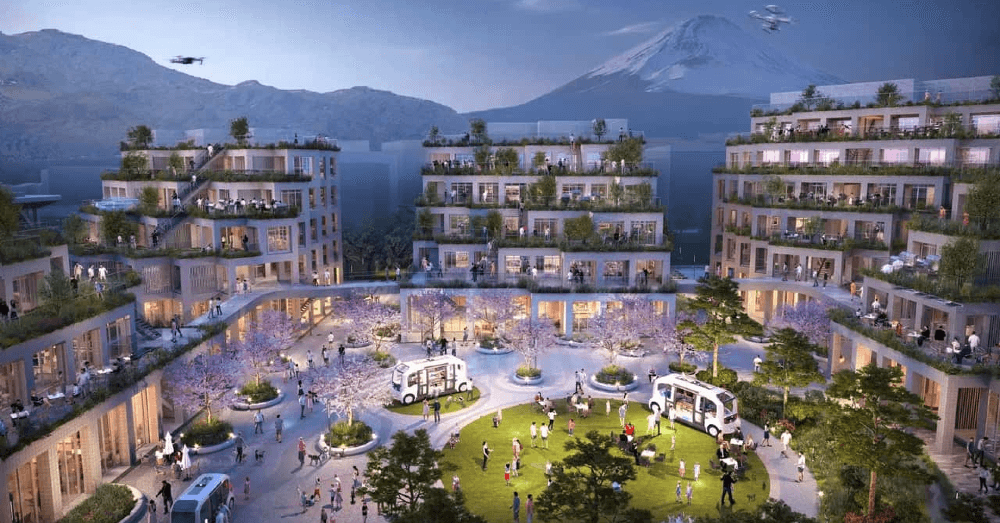
Toyota Woven City is a small town at the base of Mount Fuji where 100 Toyota employees have taken up residence to live among next-generation technology.
Toyota built an entire town at the base of Mount Fuji where autonomous vehicles, delivery robots, and next-generation mobility tech get tested in real-world conditions. Almost six years after announcing the project, Woven City is finally open and housing residents who live alongside experimental technology every day. Here’s what daily life looks like in this futuristic test city and why Nvidia’s automotive business is betting big on similar tech.
Several years in the making
This small and technologically advanced test city at the base of Mount Fuji is meant to show how completely integrated technology can work in everyday life. Sure, there will be some growing pains with the autonomous vehicle testing and self-driving car technology, but with such a small testing area, those pains might be kept to a minimum while the city is being tested and perfected. This mobility innovation in Japan was first presented to the world nearly six years ago, and now it’s a reality. It’s meant to be a place where some employees live, work, and play, but also where technology can be tested and developed before being offered on a much larger scale.
Toyota Woven City turns the car brand into a mobility company
Instead of only focusing on cars and how they move about in the world, Toyota is working to rebrand itself as a mobility company that solves nearly all mobility challenges, ensuring everyone can get around utilizing the technology offered. The city is an expensive experiment, but it’s one that makes sense as Toyota and other companies suggest what the future of movement, living, and technology looks like for the entire world.
Toyota is seriously reinventing the term mobility. This new city, also called Woven by Toyota or (WbyT), is created to show how the company is serious about changing the world of mobility beyond vehicles. This new definition includes moving people, goods, information, and energy for the betterment of society. This doesn’t only mean the way we move things now, but also in space, with plans to mass produce rockets.
Other companies are watching
The success or failure of this project will likely be a catalyst for how quickly more of the world becomes automated. Nvidia and its automotive revenue hinge on the success of autonomous vehicle technology, and the NEVI program’s success in various countries could take a few pages out of the Woven City’s book in terms of EV charging infrastructure and how it plays a role in the future. Throughout the city, all transportation is completed using electricity, which means it could be the first city to offer a citywide EV charging infrastructure as a basis for future technology. Considering much of the world still paves roads with old-fashioned materials, that tech could be decades away.
Who are the residents of Toyota Woven City?
The first group of residents, who have only recently moved into the city, is made up of inventors and weavers who will collaborate with the inventors. These two groups should work together to develop and test products and services based on the foundational elements of the city and what it offers. The inventors are made up of Toyota employees and entrepreneurs who want to work on mobility. The weavers include residents and visitors, which means this city could gain an outsider’s opinion from visitors who come to stay for a bit.
Will the city grow?
Yes, once the first 100 residents take up their homes in the city and begin to understand what works and what doesn’t, others will begin to filter in. Consider this first phase to be like a soft opening of a business. The kinks need to be worked out, and any major issues resolved, before allowing other residents into the city. Eventually, the city will expand to around 360 residents, which will include partner families. This will be part of the second phase, which is nearly completed. After the first two groups, the goal is to expand the population to around 2,000 residents and open the city to public visitors starting late next year.
The Toyota Woven City is an amazing experiment that is meant to show how interconnected things can be while providing the right mobility solutions for each individual residing inside the city. Would you want to take up residence in WbyT, or would you rather visit for a few days?

This post may contain affiliate links. Meaning a commission is given should you decide to make a purchase through these links, at no cost to you. All products shown are researched and tested to give an accurate review for you.