
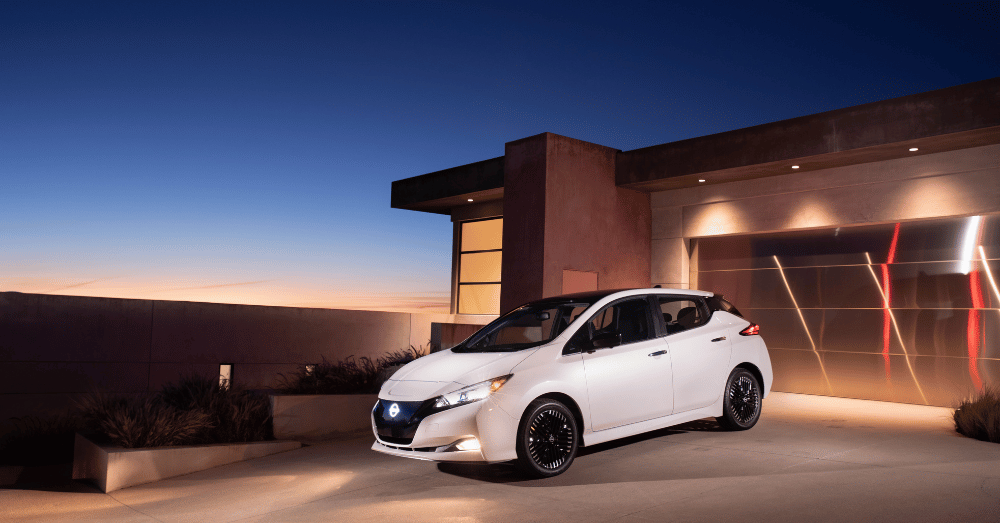
Park anywhere, spend less on charging, and zip through traffic like you own the place. Small EVs are making city driving easier than ever in 2025, and if you’re smart about buying one, you can save thousands.
- The Nissan Leaf, Hyundai Kona Electric, and Fiat 500e are leading the charge in urban areas with prices starting under $35,000
- These compact models excel at city driving with tight turning circles, easy parking, and ranges between 149 and 261 miles
- Smart shoppers can save big on used vehicles by checking battery health reports and understanding warranty coverage before buying
City streets are changing fast. Walk through any downtown area and you’ll spot something different about the cars squeezing into parallel parking spots and darting through congested intersections. They’re smaller, quieter, and they’re electric.
The compact EV market has exploded in 2025, and it makes perfect sense when you think about it. These little cars were designed for urban life. Take the Fiat 500e. At just over 11 feet long, it’s so small you can fit it into spots that would make a regular sedan driver weep. The turning radius on these things is ridiculous. You can U-turn on streets where most cars would need to back up twice.
What Makes These EVs Perfect for Cities
Compact EVs have become the go-to choice for city drivers who are tired of wrestling with parking and gas prices. The Nissan Leaf starts at $29,635, making it one of the most affordable EVs on the market. Sure, the base model only gets 149 miles of range, but here’s the thing: most city drivers don’t even come close to that in a typical day. The average European drives about 7.7 miles daily, and Americans aren’t doing much more for their urban commutes.
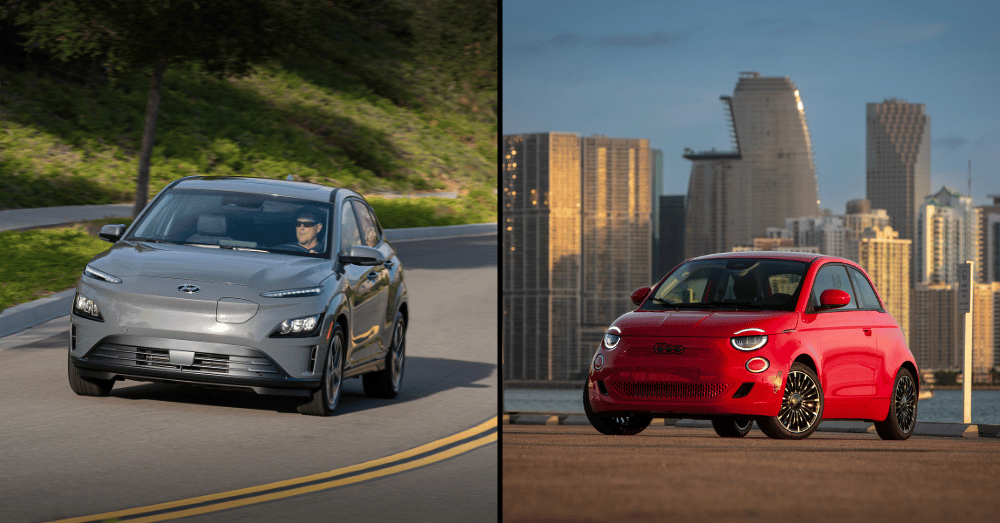
The Hyundai Kona Electric ups the ante with a 261-mile range in its higher trims, starting at $34,470. What’s cool about the Kona is that Hyundai redesigned it for 2024, making it longer, wider, and taller while keeping it nimble enough for city streets. The Kona Electric also comes with that 10-year battery and powertrain warranty, which is a pretty sweet deal if you’re worried about long-term costs.
Then there’s the Fiat 500e, which came back to the U.S. market in 2024 after a five-year hiatus. Starting at $32,495, it’s positioned as the ultimate urban fashion statement. With its retro styling and Rose Gold color options, it’s got character for days. The downside? That 149-mile range means you’re planning around charging stations if you venture outside the city. But for pure city driving, where you’re hopping from coffee shop to grocery store to work, it’s plenty.

Why Size Actually Matters
Here’s something most people don’t think about until they’re circling the block for the tenth time: compact EVs take up about 75% less parking space than a full-size SUV. In cities where parking spots cost more than some people’s rent, that’s huge. These cars can slide into spots that other drivers won’t even attempt.
The maneuverability advantage goes well past parking. Stop-and-go traffic, tight turns, narrow alleyways. Compact EVs handle all of it better than their larger cousins. Electric motors deliver instant torque, so even though these cars are small, they’ve got enough pep to merge onto highways and zip through intersections. The Fiat 500e hits 60 mph in 8 seconds flat, which is more than enough for getting where you need to go.
Energy efficiency is another win for compact EVs in urban settings. City driving usually kills fuel economy in gas cars, but electric vehicles do the opposite. Regenerative braking systems recapture energy every time you slow down, which happens constantly in city traffic. Most compact EVs use only 12-15 kWh per 100 km in urban driving, making them incredibly cheap to run. Charge at home overnight and you’re looking at maybe $3-4 for 100 km of driving.
Getting a Deal on a Pre-Owned Compact EV
The used EV market has gotten interesting lately. Early adopters who bought compact EVs a few years ago are trading up, which means there’s a growing selection of used vehicles available at significantly lower prices than new models. A 2020-2022 Nissan Leaf or Hyundai Kona Electric can save you $10,000 or more compared to buying new.
But here’s where you need to be smart. The battery is the heart of any EV, and its health determines everything from how far you can drive to what the car will be worth when you sell it. Before you buy any pre-owned compact EV, you absolutely need to check the battery’s condition.
Start with the basics: fully charge the car and look at the displayed range. Compare it to the EPA estimate for that model when it was new. If a 2020 Leaf originally got 149 miles and now shows 130-140 miles on a full charge, that’s normal degradation. Most EV batteries lose about 2-3% of their capacity per year. If you’re seeing numbers way below that, walk away.
Get a professional battery health report if you’re serious about a particular car. Services like Recurrent or platforms like Autotrader now offer detailed battery diagnostics that show capacity loss, individual cell health, and projected future performance. Many dealerships can run these reports too. It’ll cost you a bit up front, but it’s way cheaper than discovering you need a battery replacement after you’ve already bought the car.
Check the warranty situation carefully. Federal law requires EV manufacturers to warranty batteries for at least 8 years or 100,000 miles, and most of these warranties transfer to new owners. If the car you’re looking at still has a few years of battery warranty left, that’s solid protection against unexpected costs. Some manufacturers offer even longer coverage. Hyundai’s 10-year warranty is a standout example.
Things to Watch Out For With Used EVs
Not all compact EVs age the same way. Older Nissan Leafs (2011-2014) used a different battery chemistry that degraded faster, especially in hot climates. If you live somewhere scorching, pay extra attention to battery health reports on older models. The 2015 and newer Leafs have better thermal management systems.
Fast charging can accelerate battery degradation if used constantly. Ask the seller about charging habits. If they’ve been DC fast charging every day for years, the battery might show more wear than one that’s been mostly slow-charged at home overnight. You can sometimes spot this in the battery health report if it shows uneven cell degradation.
Tires wear out faster on EVs because of the extra weight from batteries and the instant torque delivery. Check the tread depth before you buy. If George Washington’s head is visible when you stick a quarter in the tread groove, you’re looking at buying new tires soon. That’s not a dealbreaker, just factor it into your offer price.
Why Compact EVs Matter Now
Compact EVs have hit their stride in 2025. The combination of lower prices, better technology, and expanding charging infrastructure makes them a no-brainer for anyone who primarily drives in urban areas. The Nissan Leaf, Hyundai Kona Electric, and Fiat 500e each bring something different to the table, but they all excel at the same thing: making city driving less of a headache.
If you’re shopping for a pre-owned compact EV, do your homework on battery health and warranty coverage. A little diligence up front can save you thousands down the road. And honestly, once you get used to the instant torque, silent operation, and never having to stop for gas, you’ll wonder why you didn’t make the switch sooner.
Cities are getting more crowded, parking is getting harder to find, and gas prices aren’t going down anytime soon. Compact EVs solve all three problems at once. That’s why you’re seeing more of them on city streets every month, and that trend isn’t slowing down anytime soon.
